BTO Key Collection Checklist: When Should You Measure and Order Your Blinds?
Following a BTO key collection checklist in Singapore can help you plan your renovation, window measurements and blind installation in the right order.
Getting your BTO keys feels like the moment everything finally starts.
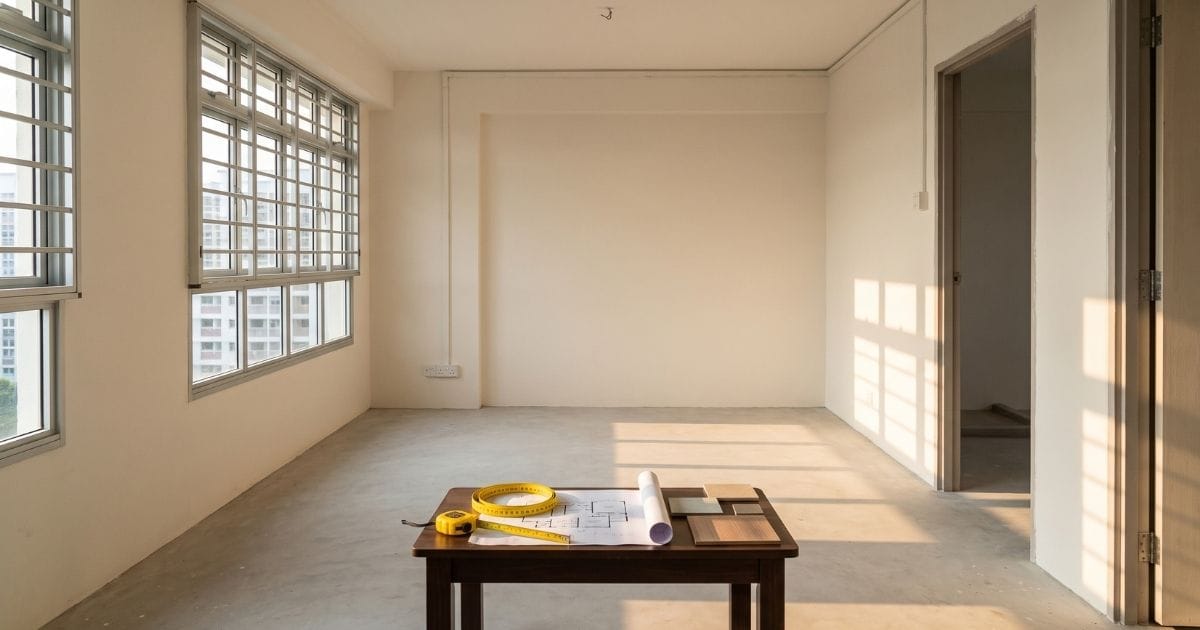
You open the door for the first time. You take another hundred photos of the empty living room. Then the renovation decisions begin arriving all at once.
Flooring. Carpentry. Lights. Air-conditioning. Furniture.
And somewhere down the list: “When should we order the blinds?”
It sounds like one of the easier decisions. Until the ceiling changes. Or your carpenter builds a pelmet. Or the window measurement you took before renovation is suddenly 20 mm different after everything is finished.
After manufacturing blinds in Singapore since 2006, we have seen enough renovation timelines to know this: choosing your blinds early is smart. Taking the final measurement too early usually is not.
Here is the sequence we recommend for BTO homeowners.
When Should You Measure Blinds for a BTO?
For a Singapore BTO, you can start choosing your blinds during the renovation-planning stage, but final site measurements should generally be taken only after works affecting the mounting area — such as false ceilings, pelmets, carpentry and plastering — are substantially complete. If you are considering motorised blinds, plan the electrical requirements earlier during renovation.
First Things First: Check Your BTO Before Renovation Starts
Before getting excited about curtains, blinds or built-ins, do your defect inspection.
HDB advises new-flat owners to report defects within one month of key collection and before renovation works begin. New flats also come with a one-year Defects Liability Period from the date of key collection.
- windows
- walls
- ceilings
- window ledges
- plastering
- openings
That matters for blinds because rectification work around these areas could change the finished condition where your blind eventually needs to sit.
Recommended sequence: Key collection → Defect inspection → Rectification → Renovation → Final blind measurement → Fabrication → Installation
Not: Key collection → Measure everything immediately → Renovation → Measurements change → Re-measure
When Should You Start Choosing Your Blinds?
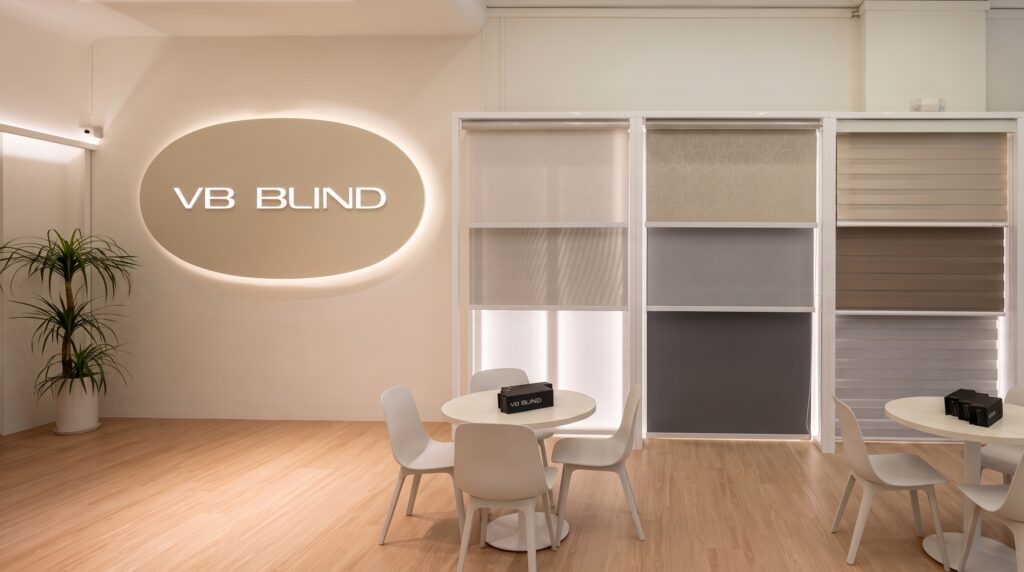
Start exploring as early as your renovation-planning stage. You do not need to wait until renovation is finished to decide what you like. In fact, choosing the type of blind early can help your interior designer and electrician plan properly.
- blackout roller blinds in the bedrooms
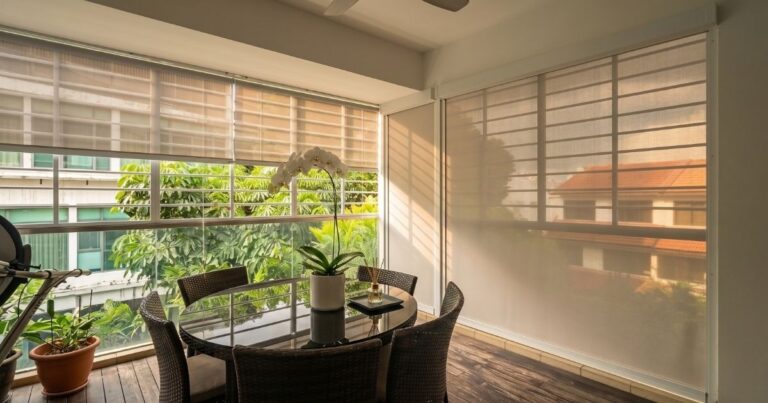
- sunscreen roller blinds in the living room
- motorised blinds across a wide window
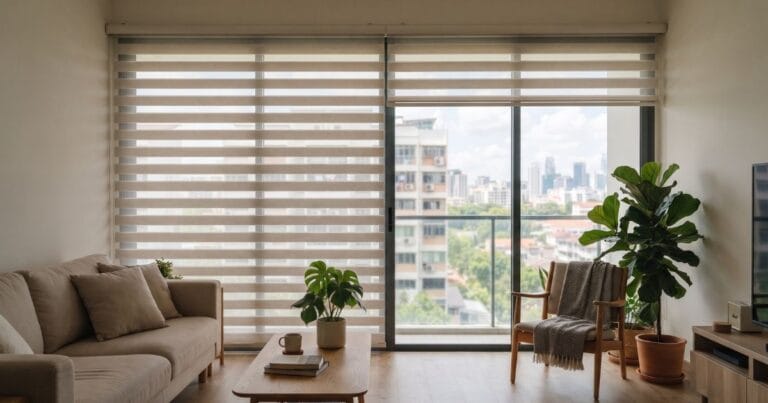
- Shadow/Korean blinds for a softer interior
- Trishade blinds for layered light control
Motorised systems deserve particular attention because wiring and power points are far easier to plan before the ceiling and electrical works are completed. VB Blind motorised indoor blind systems use a 240V mains connection, so tell your renovation team early if motorisation is on your wish list.
| Thinking about motorised blinds for your BTO? Talk to a VB Blind authorised dealer while your electrical plan is still being finalised. It is much easier to plan the power supply now than to rethink a finished ceiling later. [Talk To Us] |
When Should You Take the Final Blind Measurements?
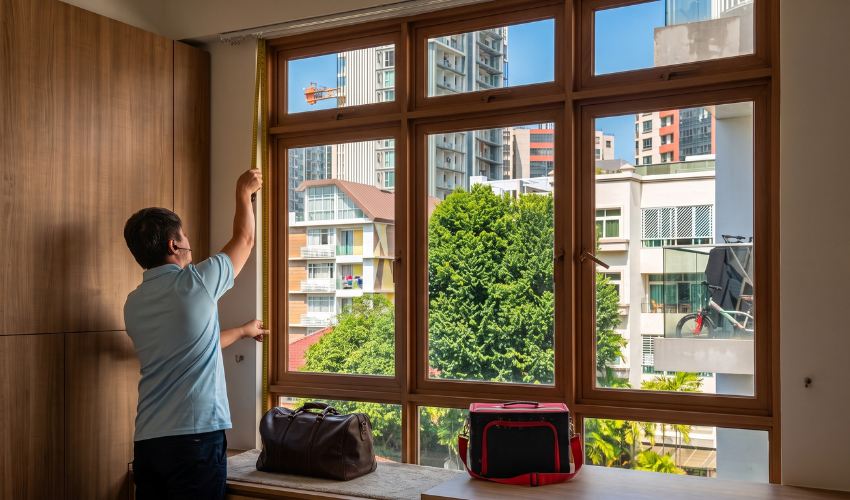
Measure the finished opening – not the opening you think you are going to have.
Final site measurements are best taken once the works affecting the blind mounting area are substantially complete.
- false ceilings
- curtain or blind pelmets
- window-side carpentry
- feature walls
- built-in cabinets beside the window
- plastering
- ceiling finishes
- relevant electrical works
A custom-made blind is not selected from a supermarket shelf. Its finished width, drop, mounting position and component configuration depend on the actual conditions at the window. Even seemingly small changes can matter.
The BTO Blind Timeline We Would Use
Stage 1 – Before key collection
Research what you like. Save references. Decide whether your priority is light control, privacy, appearance or manual versus motorised operation. You do not have to make the final purchase yet; the purpose is to stop blinds becoming a last-minute decision.
Stage 2 – After key collection
For homeowners using this BTO key collection checklist in Singapore, the key point is to complete your defect inspection before renovation work begins. Inspect your flat first. HDB recommends reporting defects within one month of key collection and before renovation begins. Let your ID, contractor or electrician know what type of window covering you are considering, especially if it is motorised.
Stage 3 – During renovation
Confirm pelmet design, false-ceiling height, electrical point locations, carpentry clearance, window accessibility and furniture positioning. This is also a good time to compare actual fabric samples. A fabric that looks beige on your phone can feel very different beside your flooring, paint and afternoon sunlight.
Stage 4 – When the mounting areas are ready
Arrange the professional site measurement. Your authorised dealer can determine the final dimensions and mounting approach before the blind goes into fabrication. VB Blind current general production guidance is approximately 1-2 weeks for indoor products and 2-3 weeks for outdoor products, although actual timing should always be reconfirmed when you place the order.
Should Blinds Be Installed Before or After Carpentry?
In most BTO projects, blinds should be among the later items rather than something installed while major renovation work is still happening. Renovation means dust, drilling, paint, and workers carrying boards and ladders through the flat. A beautifully finished fabric blind has absolutely nothing to gain from participating in that part of your renovation journey.
Where possible, complete major dusty and wet works first. Then install your blinds when the home is approaching handover.
One Mistake We See: Forgetting the Blind Pelmet
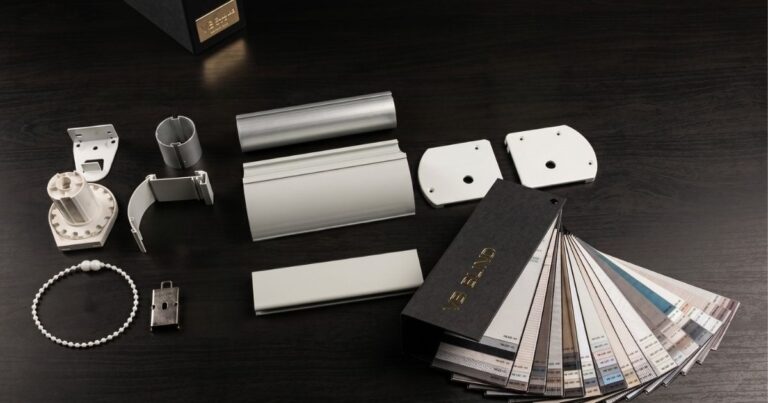
A pelmet can make a roller blind disappear neatly into your ceiling design, but only when everyone plans the same dimensions. Before your carpenter builds it, establish:
- how many blinds will sit inside
- whether they are manual or motorised
- the clearance required for the blind system
- whether the fabric rolls from the front or back
- how installers will access the system later
Do not simply tell your carpenter: “Leave some space for the blinds.” “Some space” has caused many interesting conversations on installation day. Get the actual technical requirement.
Room-by-Room: What Should You Consider?
Living room
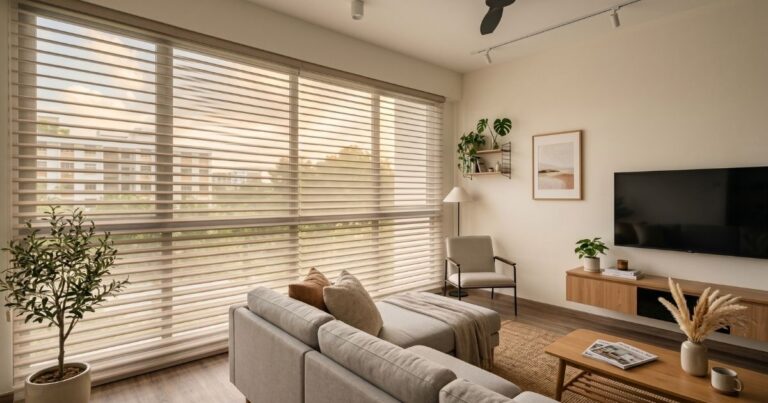
For many BTO living rooms, complete darkness is not necessary. A sunscreen blind can reduce glare and provide daytime privacy while retaining some outward visibility. If your television sits opposite the window, glare control becomes particularly important.
Master bedroom
This is where blackout tends to make more sense. VB Blind blackout roller fabrics are designed for full fabric-level light blockage and privacy. Bear in mind, however, that a blackout fabric does not automatically mean a perfectly dark room: light can still enter around the edges depending on installation configuration.
Children’s bedroom
Think beyond colour. Consider darkness at bedtime, ease of operation, furniture placement, appropriate operating controls and accessibility. A blind should work with the way the room will actually be used.
Study or home office
Glare control is usually more important than maximum darkness. Position your desk first if possible, then think about how direct sunlight reaches the monitor throughout the day.
Buying Blinds for a BTO? Ask These Questions
- Is the measurement based on the final finished opening?
- Is there enough clearance for the chosen system?
- Will nearby windows, handles or cabinets interfere?
- If motorised, has the required power supply been prepared?
- What fabric gives the room the light control I actually want?
- Who will handle installation?
- What warranty terms apply to my specific product?
- Who do I contact if something requires adjustment later?
Those questions may not be as exciting as choosing the colour. They are usually more important.
Why Measurement Matters to Us
VB Blind is not simply a catalogue of window coverings. We have been manufacturing blinds in Singapore since 2006 and have supplied more than 50,000 residential and commercial projects covering over 7 million sq ft of windows. Products are fabricated locally according to project measurements and specifications.
A good blind begins long before the fabric is cut. It begins with understanding the room properly.
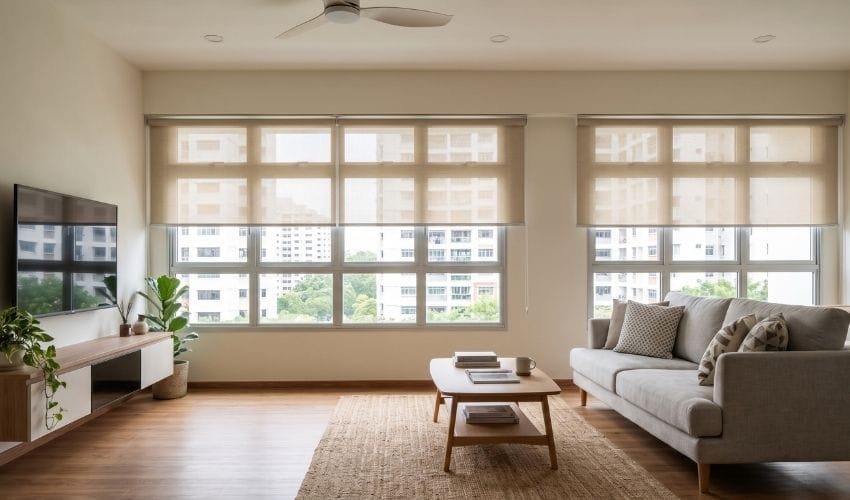
BTO Key Collection Checklist Singapore: Your Blind Planning Checklist
Choose early. Plan early. Measure at the right time. Do your defect inspection first. Let your renovation team know early if you are considering motorisation or a blind pelmet. Complete the works that could change the mounting area. Then arrange the final site measurement before fabrication.
Keep this BTO checklist handy as your renovation progresses: choose early, coordinate early, but take the final measurements only when the mounting areas are ready.
| Your BTO does not need “just a blind”. It needs the right blind for the way you are going to live in it. Tell us which rooms you are working on and what you want them to feel like. We will connect you with a VB Blind authorised dealer who can bring samples, measure the space and recommend the appropriate solution. [Talk To Us] | [Find an Authorised Dealer] |