What Is a Shangri-La Blind (Trishade)? Singapore’s Guide to 3-Layer Blinds
If you’ve been searching for Shangri-La blinds Singapore homeowners actually recommend, you’ve probably noticed the results also mention “Korean blinds” and “Trishade” — sometimes on the same listing. They’re not different products wearing different names by accident. They’re the same window furnishing category, and understanding how they’re actually built is the difference between a blind that looks good on day one and one that still glides smoothly five years from now.
This guide breaks down what a Shangri-La blind is, how the three layers are actually constructed, how it compares to Korean blinds, and the trade-offs worth knowing before you commit.
Thinking about Shangri-La blinds for your home? [Contact for a free quote]
Shangri-La Blinds Singapore: What They Actually Are
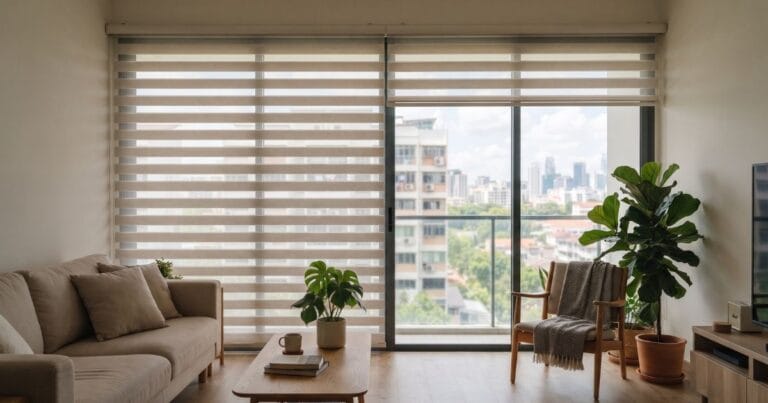
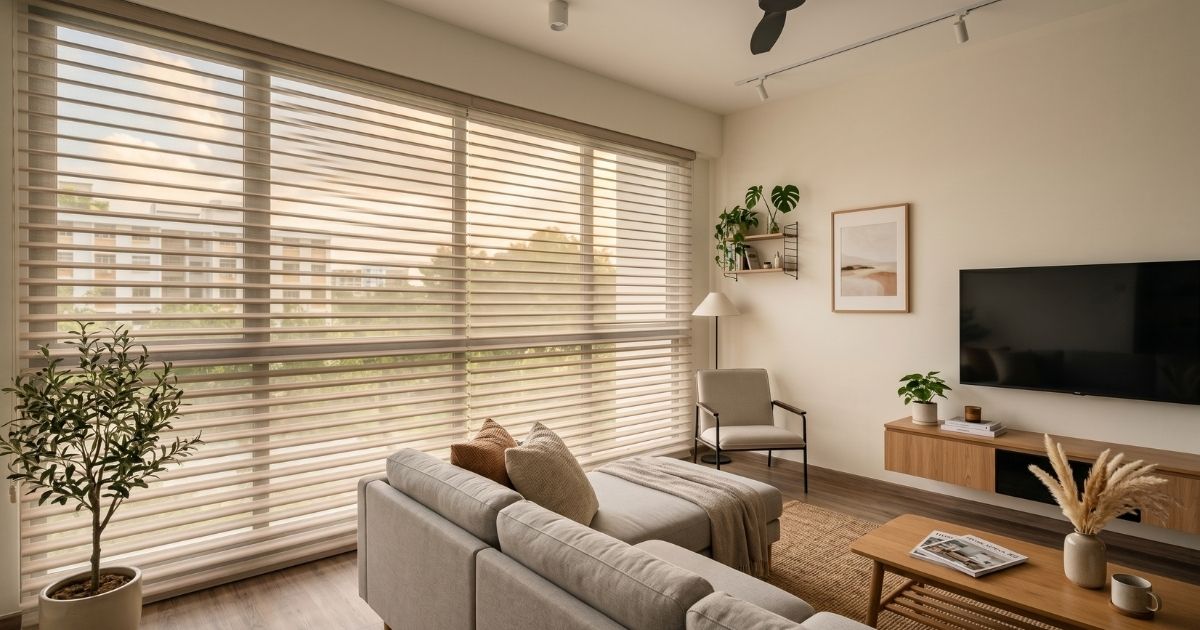
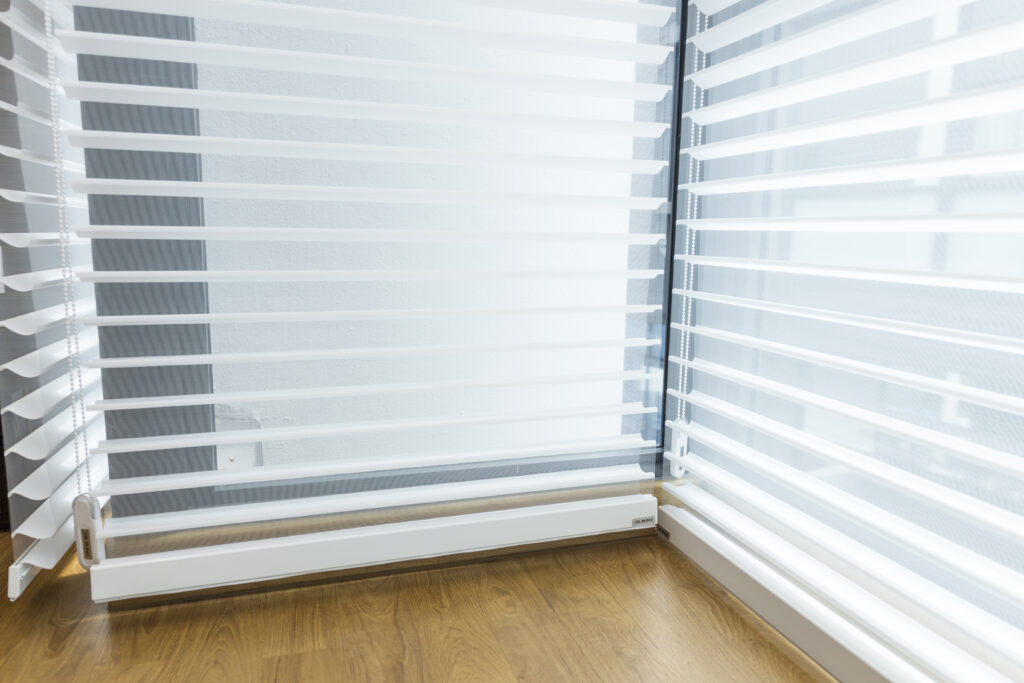
A Shangri-La blind — sold under the product name Trishade by VB Blind — is a window covering made of alternating sheer and solid fabric strips (called vanes) sandwiched between two sheer fabric panels. Turn the vanes flat and light streams through the sheer sections for a soft, diffused glow. Turn them closed and the solid strips overlap for dimout privacy. Angle them somewhere in between and you get everything from gentle daylight to a much darker room, all from one blind.
The name “Shangri-La” is the market’s informal shorthand — it’s what most Singapore homeowners search for and ask their contractors about. “Trishade” refers to the same three-layer construction; you’ll see both terms used interchangeably in the trade.
A note on fabric type: VB Blind’s Trishade line comes in dimout fabric, which significantly reduces light and adds privacy but isn’t designed for full room blackout. If total darkness is the priority for a specific room, a dedicated blackout roller blind is the better fit — more on that trade-off below.
Why It Matters That VB Blind Manufactures In-House
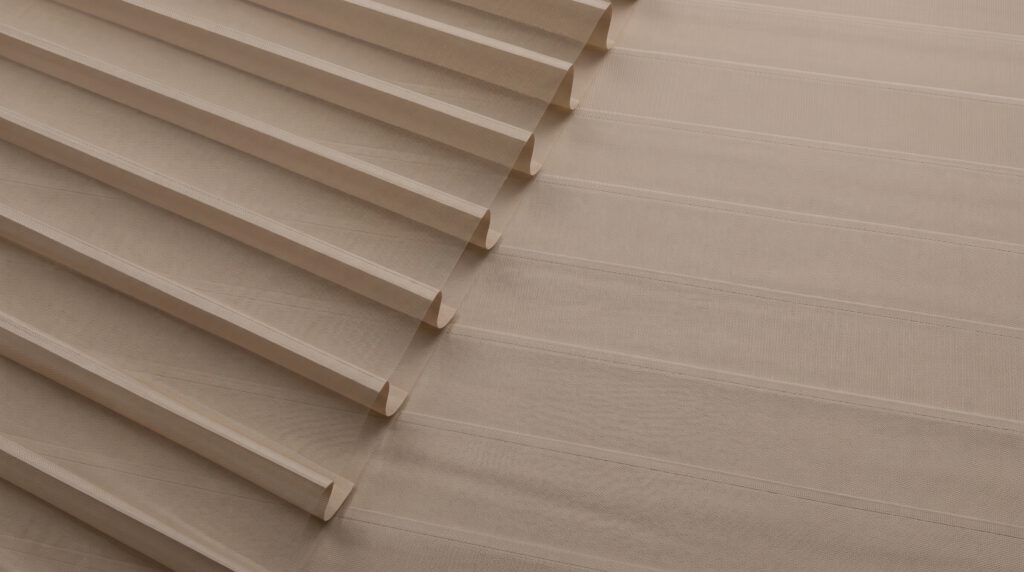
Most sellers of Shangri-La blinds in Singapore don’t manufacture them — they resell a finished product sourced elsewhere, which means they can tell you what it looks like but not always how it’s built or how it’ll hold up over time.
VB Blind has manufactured window blinds in-house since 2006, with over 7 million sq ft installed across 50,000+ residential and commercial projects. Buying from a manufacturer rather than a pure reseller generally means two practical advantages: the supplier can speak directly to how the product is made, and they’re in a position to stand behind a warranty on workmanship, not just the fabric.
Questions worth asking before you buy a Shangri-La blind, from any supplier:
- How are the vane seams joined — ask them to show you, not just describe it.
- What fabric weight or grade is used for the sheer layers? Denser fabric typically holds its shape and resists yellowing longer in Singapore’s humidity.
- Is the track pre-calibrated, and what happens if the vanes sit unevenly after installation?
- What does the warranty actually cover — the mechanism, the fabric, or just installation?
A supplier who manufactures locally should be able to answer these on the spot. If they can’t, that’s worth knowing before you commit.
Shangri-La Blinds vs. Korean Blinds: What’s the Real Difference?
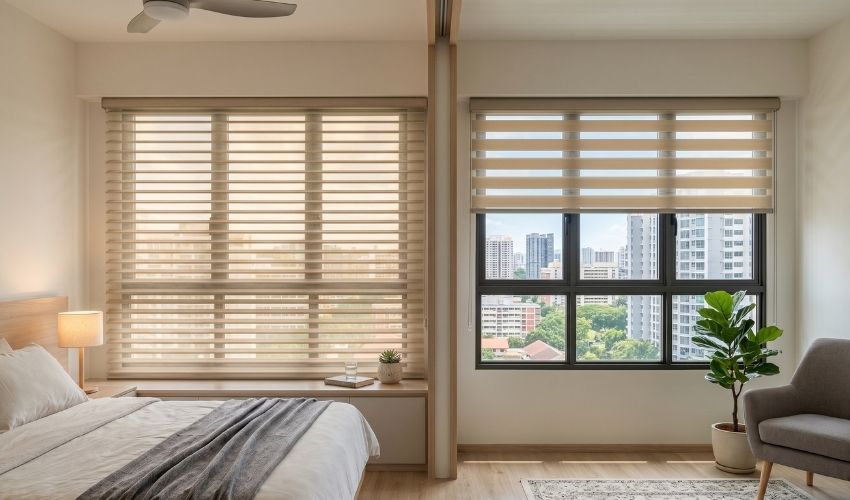
Short answer: in casual conversation, “Korean blinds” and “Shangri-La blinds” often refer to the same three-layer sheer-and-vane product — the “Korean” label stuck around from when these blinds became popular through Korean home decor imports. If a seller is drawing a hard technical distinction between the two, ask them specifically what’s different about their construction, because the terms aren’t standardized across the Singapore market.
If you’re weighing the two side by side, our Korean Blinds page covers that product’s construction and finish options in more depth.
Where real differences do show up:
| Factor | What to check |
|---|---|
| Vane construction | Ask directly how the seams are joined and inspect a sample in person |
| Fabric density | Heavier sheer = better light control and durability |
| Track mechanism | Smoothness of operation, alignment precision |
| Warranty on mechanism | Manufacturers can offer this credibly; pure resellers often can’t |
The label on the listing tells you less than the answers you get when you ask about construction.
Pros and Cons of Shangri-La Blinds
Pros:
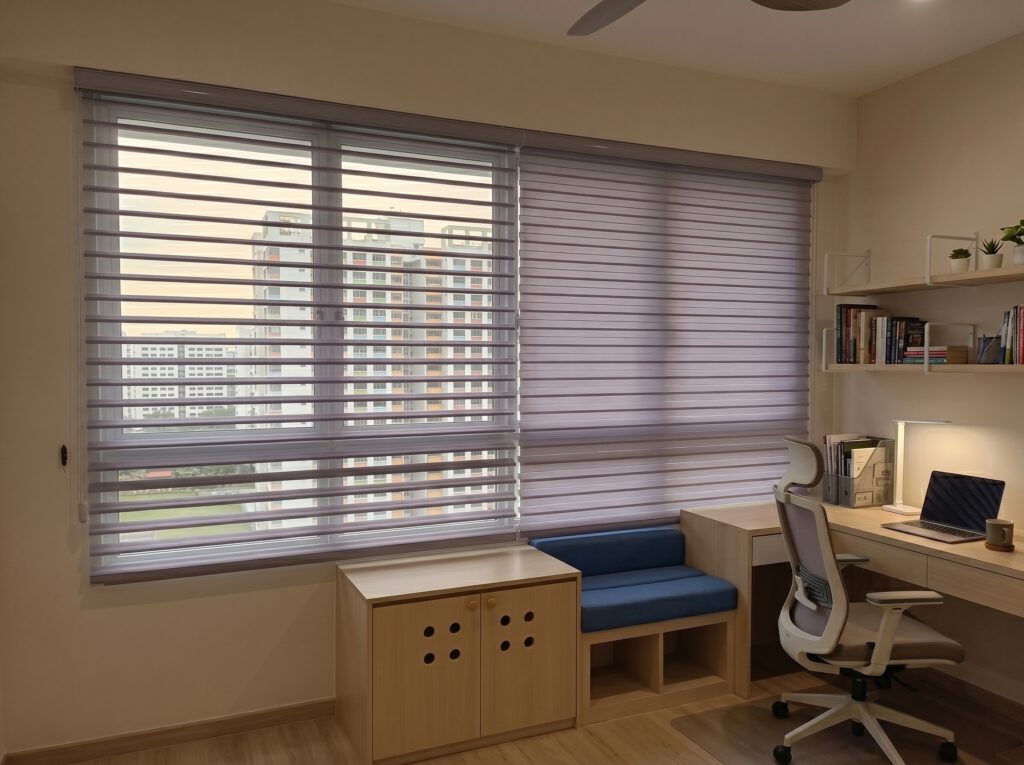
- Adjustable light control from sheer to dimout in one blind, no need for a separate curtain layer
- Modern, clean aesthetic that suits both HDB and condo interiors
- No fabric bunching at the top when raised, unlike curtains — practical for smaller Singapore units
- Easier to keep clean than fabric curtains; wipeable and less dust-retentive
Cons:
- Lower-quality units can degrade visibly within 1–2 years — fabric weight and seam quality vary a lot between suppliers
- Typically costs more than a basic roller blind, given the more complex construction
- This is a dimout product, not blackout — expect meaningfully reduced light and small gaps at vane overlaps even at the darkest setting, not a fully dark room
- Fitted with a side hold/clip that anchors the blind to the window frame — this adds an extra step when cleaning or maintaining the blind compared to blinds without a side fixing
Not sure if Shangri-La blinds suit your space, or whether roller or curtains would work better? [Speak to a specialist] — we’ll give you an honest comparison based on your room, not just a sales pitch.
Is a Shangri-La Blind Right for Your Home?
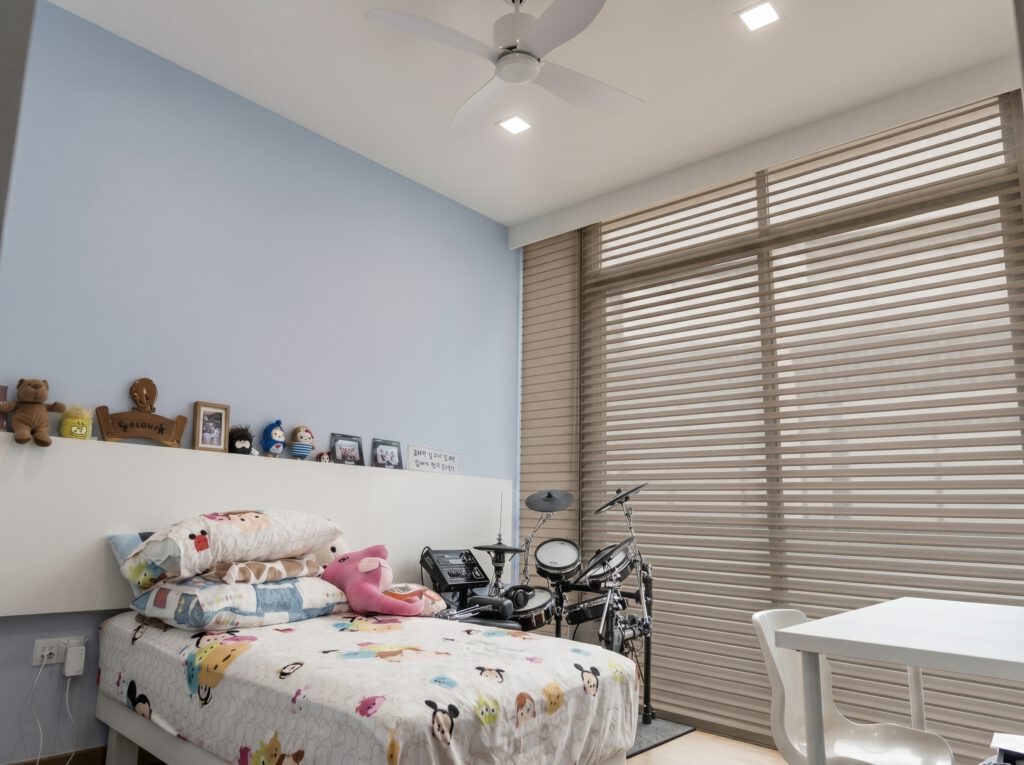
Shangri-La blinds work well for living rooms, bedrooms, and study spaces where you want flexible light control without swapping between curtains and blinds. Since VB Blind’s Trishade line is dimout rather than blackout, it’s not the right fit for spaces needing total darkness — media rooms, or bedrooms for shift workers — where a dedicated blackout roller blind or curtain lining will outperform it.
If you’re comparing options across your whole home, it’s worth asking a specialist to walk through room-by-room recommendations rather than picking one blind type for everything.
Ready to see Shangri-La / Trishade blinds in your own space? [Book a free home consultation] — we’ll bring fabric samples and measure on the spot.
Frequently Asked Questions
Is Shangri-La blind the same as Trishade blind? Yes. “Shangri-La” is the common market name; “Trishade” is VB Blind’s product name for the same three-layer sheer-and-vane construction.
Do Shangri-La blinds work for HDB windows? Yes, they’re commonly installed in HDB flats and are compatible with most standard window and door frame types, though exact fitting should be confirmed with an on-site measurement. Note that Shangri-La blinds are an internal window furnishing, not a structural window replacement — they generally don’t fall under HDB’s permit requirements for window works, but if your renovation also involves any structural window or grille changes, check HDB’s official renovation guidelines first.
How long do Shangri-La blinds last? This depends heavily on construction quality and fabric grade, which varies between suppliers. Warranty coverage also varies by product tier; ask your supplier for their specific terms in writing.
Can Shangri-La blinds be motorized? Yes, motorized options are available for homes wanting remote or smart-home integration.
Have questions about which blind type suits your home? [Get in touch] for a no-obligation consultation and quote.