ZipScreen vs Outdoor Roller Blinds: Which Suits Your Condo Balcony?
If you’ve spent any time comparing outdoor blinds for your condo balcony, you’ve probably landed on the same question we get asked almost every week: zip screen or standard outdoor roller blind — which one actually holds up?
It’s a fair question, and a genuinely tricky one, because so much of what’s written about it online leans on scary-sounding stats with no source behind them. Numbers like “zip blinds survive 50km/h winds, standard rollers fail at 20km/h” get repeated across blog after blog without anyone showing where they came from.
That’s what this ZipScreen vs outdoor roller blinds comparison is actually about: how the two systems actually differ, what Singapore’s real wind and rain conditions look like, and an honest read on which one fits your balcony — high floor, low floor, sea-facing, sheltered corner, or otherwise.
ZipScreen vs Outdoor Roller Blinds: What’s Actually Different
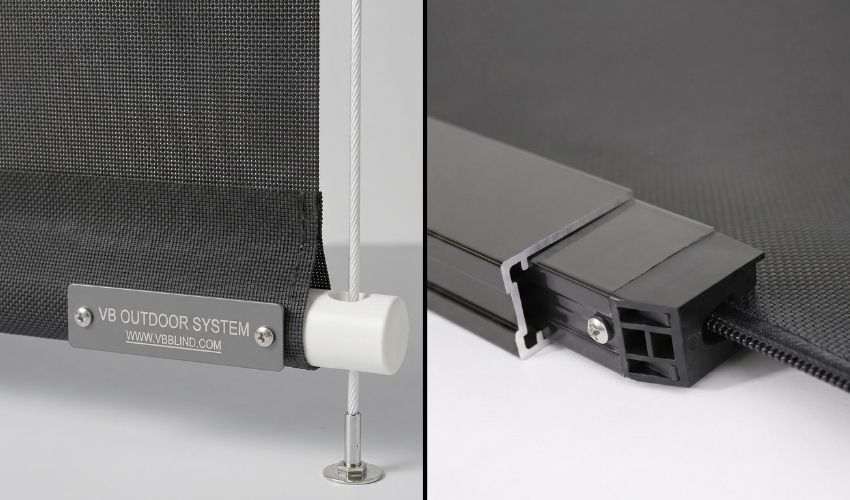
The core difference comes down to how the edges of the fabric are managed.
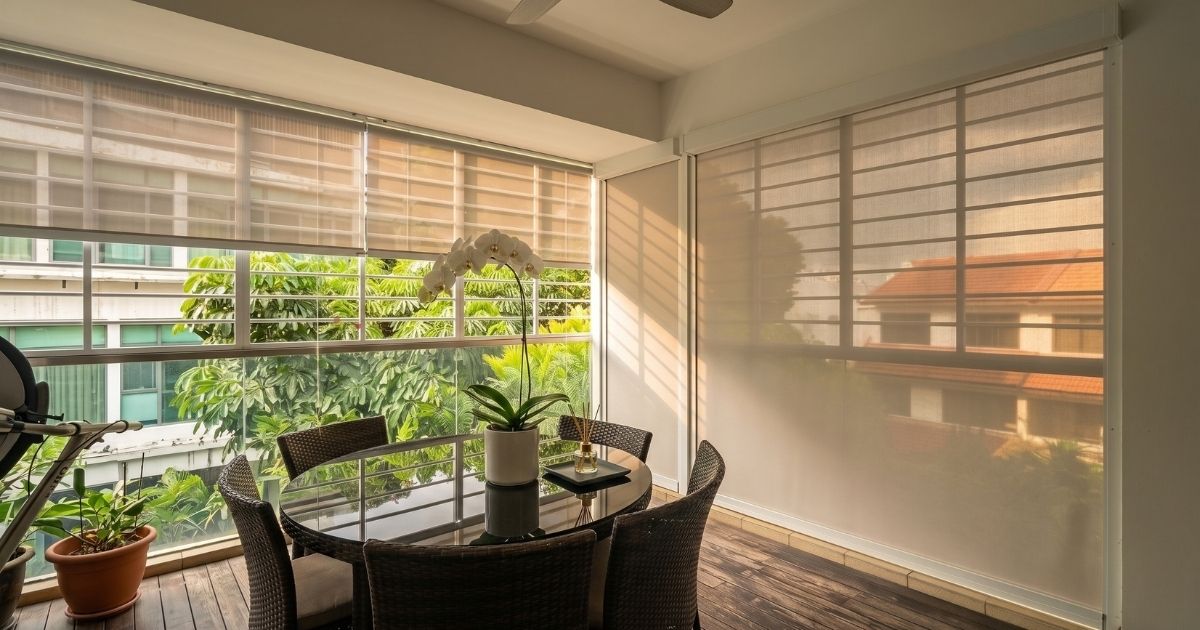
- Outdoor roller blinds run on a stainless steel cable side guide — the fabric rolls up and down a single top-mounted tube, with each edge threaded along a cable to help keep it in place as it descends. It’s a stability system, not a seal: the edges aren’t locked into a track, so the fabric can still shift under strong wind.
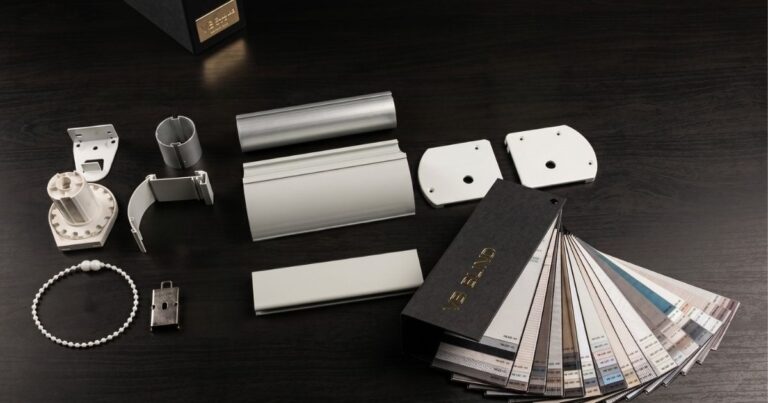
- ZipScreen systems run the fabric edges through a fixed aluminium side channel (the “zip”), using a hidden Z-LOCK fastening mechanism. The channel locks both edges of the fabric for the full drop, so the screen stays flat and taut against the frame rather than moving independently of it.
That difference — cable-guided versus channel-locked — is what drives most of the practical gap between the two: how they behave in wind, how much rain gets through at the sides, and ultimately, what they cost.
Across the condo balconies we’ve fitted over the years — from low-rise blocks to units well above the 20th storey — we’ve seen where each system genuinely earns its price premium, and where a standard roller blind does the job just fine. That’s the honest comparison we want to walk you through here, not a sales pitch for the more expensive option.
Which Holds Up Better in Singapore’s High-Floor Winds?
This is where most of the marketing claims fall apart, so let’s start with what’s actually documented.
Singapore doesn’t get typhoons — we sit too close to the equator for tropical cyclones to properly form. Our strongest surface winds instead come from Sumatra squalls: fast-moving thunderstorm lines that sweep in from the Malacca Strait, mostly between April and November. According to the Meteorological Service Singapore, these squalls typically produce gusts in the range of 40–80 km/h, and Singapore experiences an average of around 45 such squalls a year. The most severe on record remains a gust of 144.4 km/h measured in Tengah back in 1984; more recently, a squall in September 2024 hit 83.2 km/h at East Coast Park and brought down over 300 trees.
Two things matter for your balcony:
- Wind speed genuinely increases with height. Buildings funnel and accelerate airflow as you go up, so a high-floor or corner unit will feel gusts more strongly than a similar unit on a lower, more sheltered floor.
- A cable-guided edge still moves more than a locked one. VB’s standard outdoor blinds use a stainless steel cable side guide to reduce flipping and swaying, but it isn’t wind-rated the way ZipScreen is — in strong gusts, the fabric can still move at the edge, which is exactly the kind of repeated stress that shortens fabric and motor life over time. A zip channel keeps both edges physically locked, which meaningfully reduces that movement. This is also why we recommend retracting manual outdoor blinds during heavy storms.
Is a Zip Blind Really Waterproof in Singapore’s Rain?
Short answer: more water-resistant than a standard roller, but “fully waterproof” isn’t quite accurate for either system, and we’d rather tell you that upfront than oversell it.
Because the zip channel seals the fabric edges against the frame, it does a noticeably better job of keeping wind-driven rain from sneaking in sideways — which is the main way rain gets past an outdoor blind in the first place. A standard roller blind’s cable-guided edges aren’t sealed, so they tend to let more rain slip in at an angle, especially once wind picks up.
That said, Singapore’s rain isn’t always gentle. During the Northeast Monsoon (roughly December to early March), we get multi-day rain spells that can bring sustained, heavy, wind-driven rain — the kind that will test any external screen, zip channel or not. If your balcony faces the weather head-on and gets hit hard during monsoon season, it’s worth discussing whether a zip screen alone is enough, or whether pairing it with a glass or PVC panel section makes more sense for full weather protection.
ZipScreen Singapore Price: What to Budget For
ZipScreens cost more than standard outdoor roller blinds, and here’s honestly why: you’re paying for the additional aluminium side-channel hardware, more precise fabrication (the fabric has to be cut exactly to fit the channel, unlike a roller which has more tolerance), and a wider range of operating systems built around holding the screen taut against that channel.
Rough price drivers to expect on a quote:
- Fabric openness factor — VB’s outdoor roller blinds range from 0.5% to 5% openness (5% is standard), while ZipScreen uses a 1% openness Phifer SheerWeave fabric. Tighter weaves generally cost more.
- Operating system — outdoor roller blinds come in manual pulley-chain or motorised versions; ZipScreen adds a third option, a spring-boosted manual system, alongside motorised and crank-operated versions. More sophisticated operating systems add cost.
- Width and drop — larger openings cost more, and zip systems in particular scale in price with width due to the channel length.
- Number of panels — L-shaped or wraparound balconies need more channel and more panels.
So, Which Suits Your Condo Balcony?
A quick way to think about it:” to “If you’re still weighing ZipScreen vs outdoor roller blinds for your balcony, here’s a quick way to think about it:
- Lower floor, sheltered facing, moderate budget → A standard outdoor roller blind is usually a perfectly sound choice, and the more economical one.
- High floor, corner unit, or facing an open wind corridor (unblocked stack, sea-facing, exposed to prevailing wind) → A zip screen’s locked edges will hold up better and last longer under repeated gusts.
- Balcony that gets hit hard during monsoon season → Zip screen first, and consider whether a partial glass/PVC enclosure is worth adding for the wettest months.
- Budget-conscious with genuinely low wind exposure → Don’t feel pressured into the pricier system if your unit doesn’t need it — a roller blind will do the job.
The honest truth is that floor height alone doesn’t decide this — facing, wind corridor, and how sheltered your stack is by surrounding blocks all matter just as much. That’s why we’d rather look at your actual unit than give you a generic rule of thumb.
Frequently Asked Questions
ZipScreen vs outdoor roller blinds — is the extra cost worth it? If your balcony is on a high floor, faces an open wind corridor, or has a history of edge movement or noise in strong wind, yes — the locked-channel design directly addresses the problem. If you’re on a low, sheltered floor, the extra cost may not buy you much practical benefit.
Can I install outdoor roller blinds on a high floor? Yes, it’s done regularly. The question isn’t whether it’s possible, but whether the cable-guided edge will hold up well over time given your specific wind exposure — which is worth checking before you decide purely on price.
How much does a zip screen cost in Singapore? It depends on width, drop, fabric choice, and operating system, so we’d rather give you an accurate figure based on your actual balcony than a generic range that may not apply.
Are zip blinds fully waterproof? No system marketed as an outdoor blind is fully waterproof in the sense of sealing out all rain. Zip screens are meaningfully more water-resistant than standard rollers because the channel seals the side edges, but very heavy, wind-driven monsoon rain can still get through at an angle.