How to Choose Blackout Blinds for Better Sleep
A bedroom can look beautifully finished and still feel wrong at 7 a.m. when sunlight slips around the window, glare lands on the wall, and everyone wakes earlier than planned. Knowing how to choose blackout blinds starts with being clear about the result you want: not simply a darker-looking fabric, but a room that feels calmer, more private, and more comfortable at the times you use it most.
For many homes, blackout blinds are chosen for bedrooms and nurseries. They can also make a real difference in media rooms, home offices, shift workers’ rooms, and west-facing spaces that receive strong afternoon sun. The right choice depends on the window, the amount of light you need to block, and how much you value a clean, tailored finish.
Start with the darkness you actually need
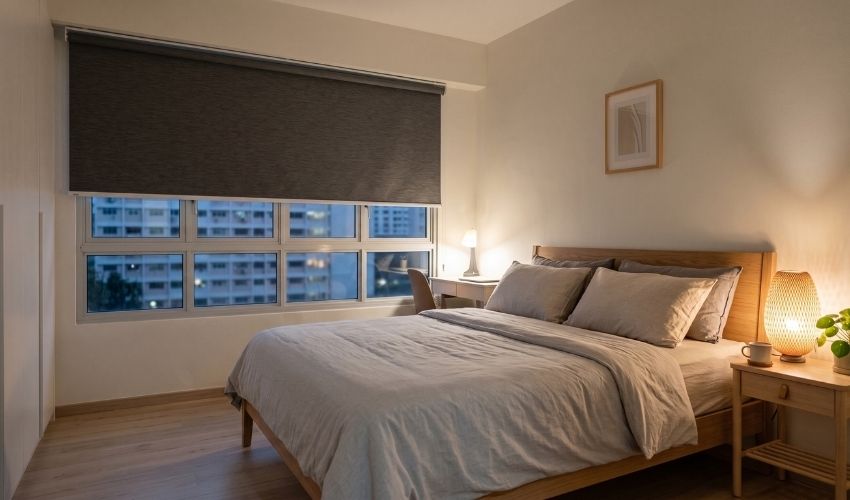
The word “blackout” can create an expectation of complete darkness. In practice, even a true blackout fabric cannot stop light that enters through gaps at the sides, top, or bottom of the blind. Streetlights, early morning sun, and bright neighboring windows can all find their way into a room if the blind is not designed and fitted with those gaps in mind.
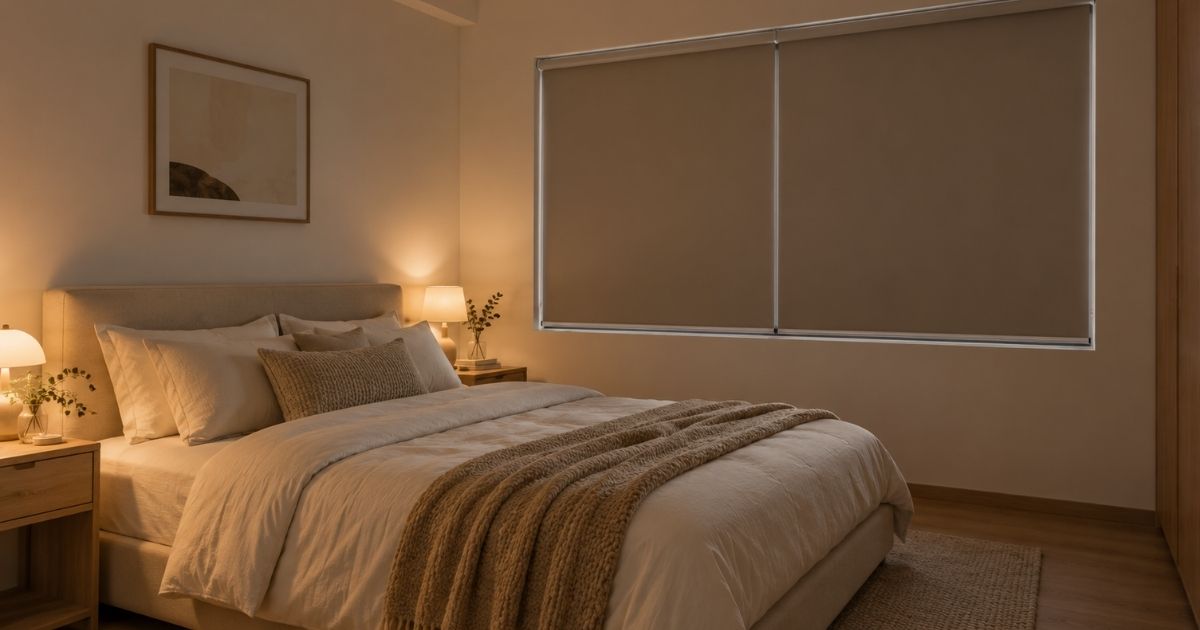
If you want a comfortably dark room for everyday sleep, a standard blackout roller blind may be the right answer. Its coated fabric blocks light through the material itself, while the roller system gives the window a neat, uncluttered look. This works especially well when the window is recessed or when a small amount of edge light will not bother you.
If darkness is the priority, ask about a system with side channels or a cassette-style arrangement. These help reduce the light leakage around the fabric and create a more enclosed finish. They are often worth considering for nurseries, bedrooms facing strong sunrise, and rooms where daytime screen viewing matters.
It is also useful to separate blackout from room-darkening fabric. Room-darkening materials soften and reduce daylight but may still allow a glow through the fabric. They can be a good choice for living areas where you want less heat and glare without making the room feel closed off. For sleep spaces, however, a genuine blackout fabric is usually the more dependable choice.
How to choose blackout blinds by room and window
A blind should suit the way the room is lived in, not just the color of the walls. Begin with the room’s purpose, then consider the window shape, placement, and surrounding furniture.
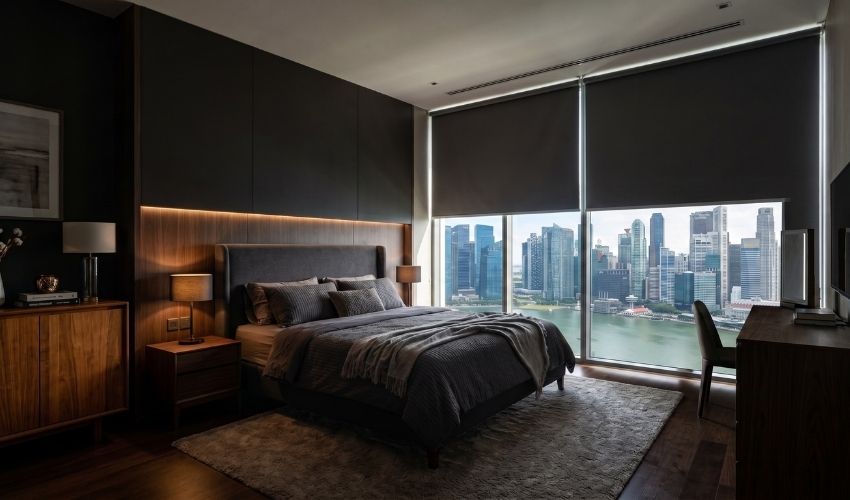
Bedrooms and nurseries
Privacy and darkness usually come first here. Choose a blackout fabric that blocks light effectively, then pay close attention to coverage. A blind mounted outside the window recess should extend beyond the glass on both sides and above the frame. This reduces side gaps and helps prevent a bright halo around the window.
For a nursery, consider how easily the blind can be operated during nap time and whether the cord or chain placement is suitable for the room. A motorized option can be convenient for high windows or when a child is asleep, but a well-made manual system remains a simple, reliable option for many homes.
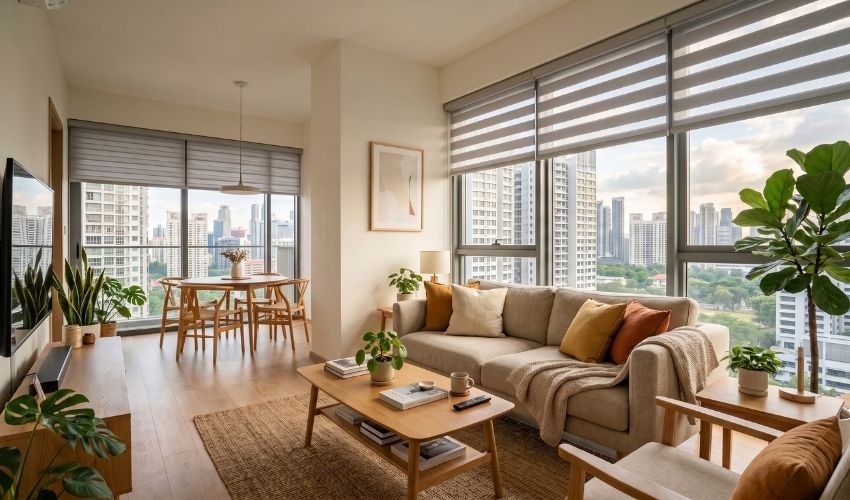
Living rooms and home offices
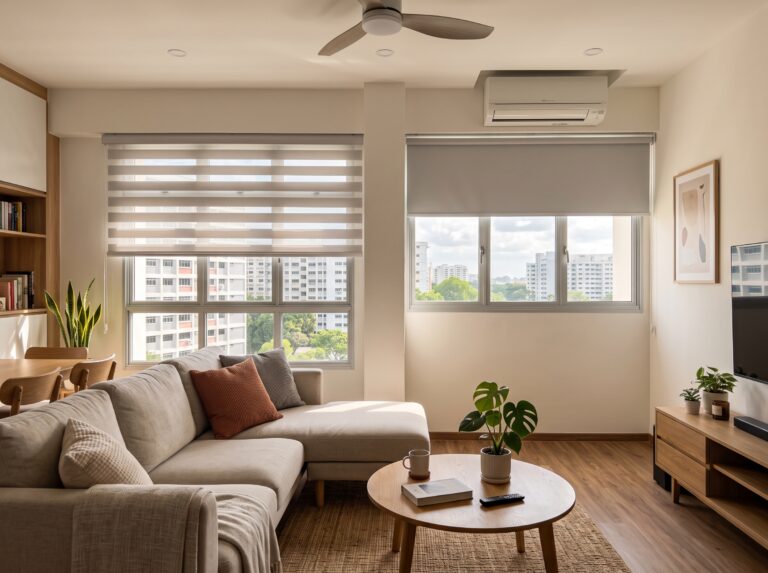
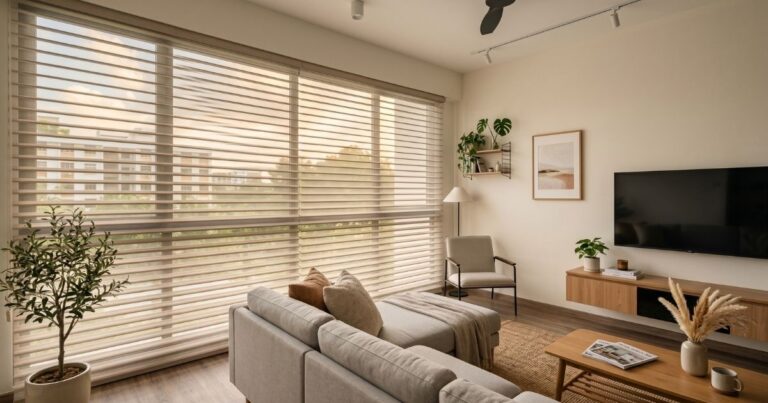
These spaces often need flexibility rather than darkness all day. A dual-blind solution can work well: one layer for soft filtered daylight and privacy, and another blackout layer for glare control, movie time, or particularly hot afternoons. Korean blinds and shadow blinds may be useful where you want to adjust between light filtering and privacy, although their blackout performance depends on the specific fabric and system selected.
If you work from home, think about where sunlight falls during video calls and screen time. Blocking harsh glare on one side of a room can make the space more usable without turning it into a dark box.
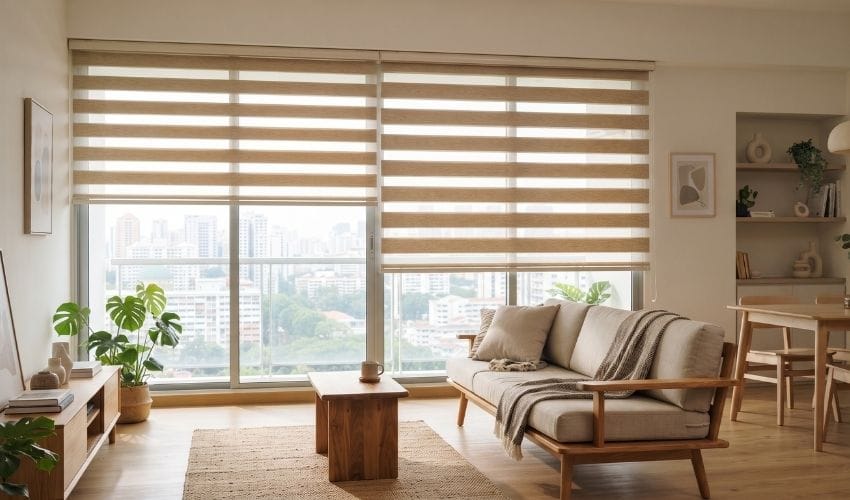
Wide windows, sliding doors, and awkward shapes
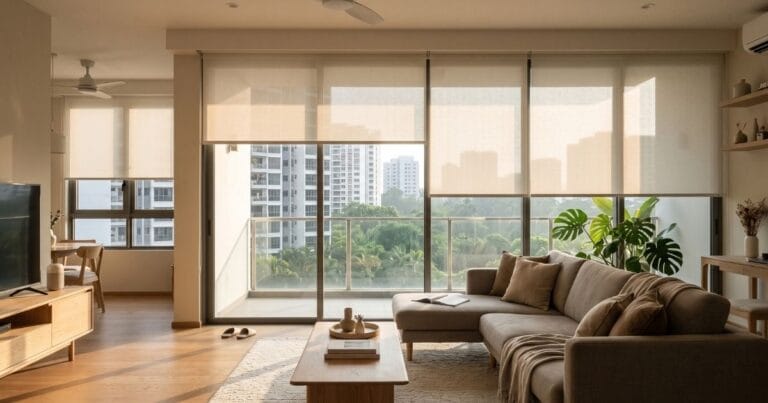
Large spans need careful planning. One oversized blind may look clean, but it can also be heavier to operate and may have practical limits depending on the fabric and bracket placement. Dividing a wide window into two or three aligned blinds can give better control and make everyday use easier.
For sliding doors, consider which panel needs frequent access. The blind layout should not make a balcony door inconvenient to open or require the entire window treatment to be raised every time someone steps outside. A site measurement is especially helpful for these details because a few inches can affect both coverage and usability.
Choose the fabric for performance, not just color
Blackout fabric has a functional backing or construction that prevents light from passing through. Yet fabrics vary in thickness, texture, color, and the way they sit within a room. A plain white or light neutral blind can still have blackout properties, making it a practical choice for smaller bedrooms that need to feel bright when the blind is raised.
Darker shades can create a more dramatic look, but they are not automatically better at blocking light. The blackout layer, fit, and installation matter more than the face color. Ask to see fabric samples against the window if possible. A sample helps you judge the texture in your room’s light and see how it works with paint, flooring, and furnishings.
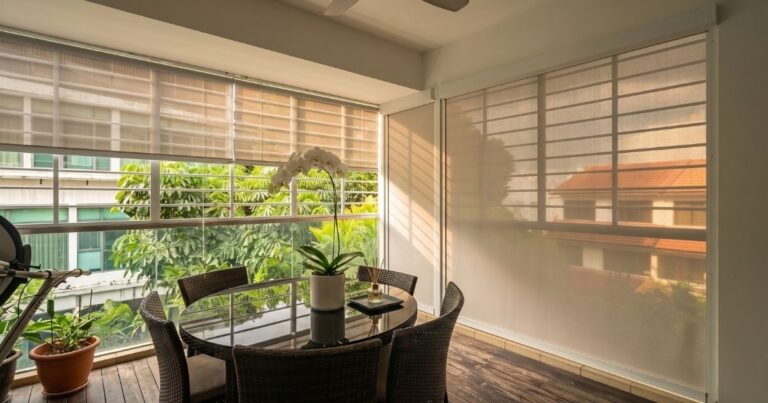
Heat control deserves its own conversation. Blackout blinds reduce direct sun entering the room, which can make spaces feel more comfortable, particularly in Singapore’s warm climate. However, blinds fitted inside the window are not the same as external shading. If the main issue is intense heat on a balcony or sun-facing facade, an outdoor shading system may offer stronger protection before heat reaches the glass.
Get the fit right: recess mount or outside mount?
A blackout blind only performs as well as its fit allows. This is why measurement should never be treated as an afterthought.
A recess mount sits inside the window opening. It can look tidy and space-saving, especially in apartments and condominiums with deep, square recesses. The trade-off is that there will usually be small gaps along the sides, where light can enter. The recess also needs enough depth for the chosen blind system and must be clear of handles, grilles, or obstructions.
An outside mount is fixed above and beyond the window opening. Because the fabric overlaps the frame, it can provide better light coverage and make a window appear taller or wider. It is often the stronger choice when darkness is important, although the blind must be planned around nearby cabinetry, air-conditioning ledges, and curtain tracks.
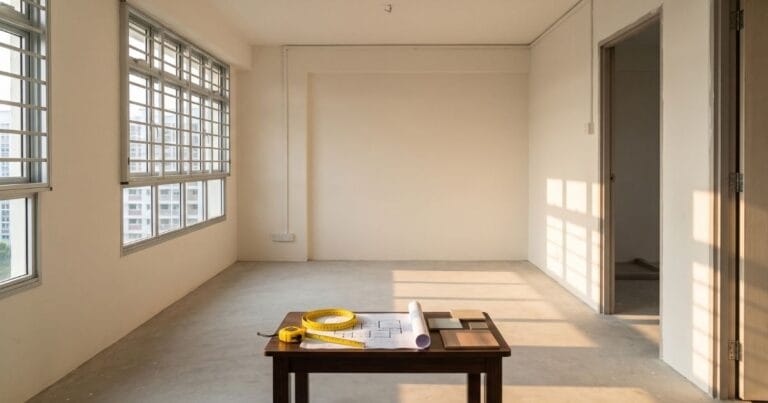
For HDB homes, private residences, and commercial spaces alike, windows are rarely as straightforward as they appear in a product photo. Frames may be uneven, ceilings may limit bracket position, and a window handle may sit exactly where the fabric needs to fall. Professional measurement identifies these issues before fabrication, when they are easiest to solve.
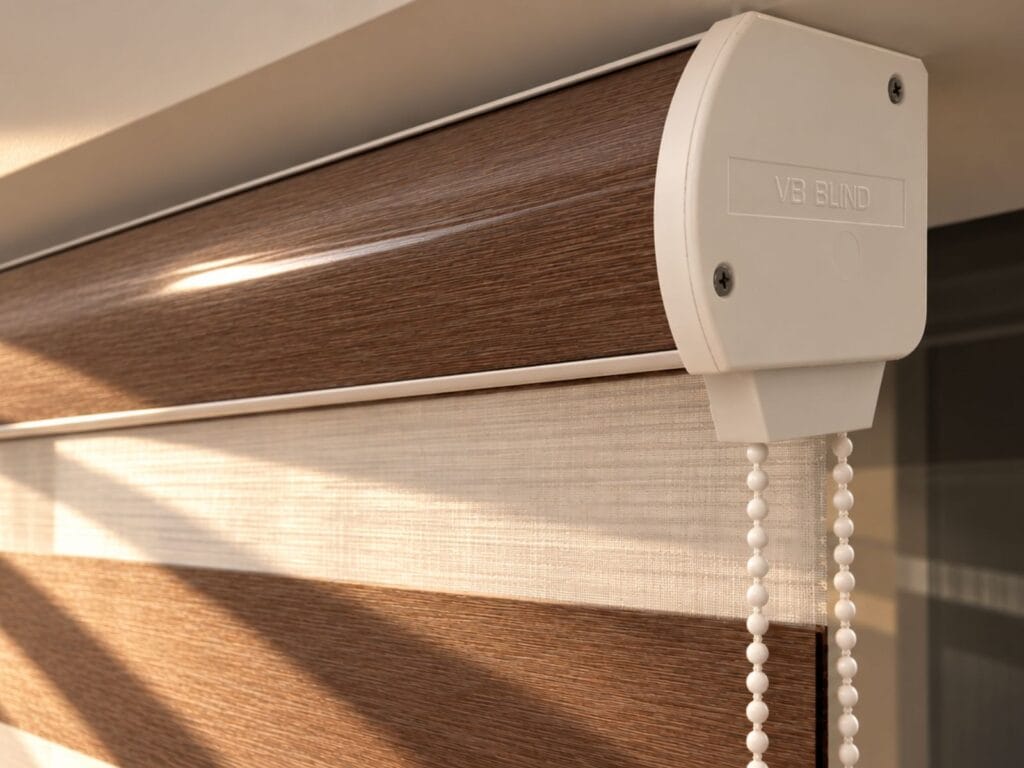
Decide how you want to operate the blind
Manual chain-operated blinds are familiar, cost-conscious, and suitable for many standard windows. Choose good-quality components and make sure the chain position is convenient from the bed, desk, or doorway. For family homes, safety devices and correct chain tensioning should be part of the installation plan.
Motorized blackout blinds are particularly useful for tall windows, hard-to-reach areas, and rooms with several blinds that should move together. They can also support a daily routine: lower the blinds before bed, raise them in the morning, or adjust them when the afternoon sun reaches the room. The trade-off is a higher initial cost and the need to consider power access, charging, or battery maintenance depending on the system.
Do not choose motorization simply because it sounds more advanced. Choose it when it removes a genuine inconvenience. A well-fitted manual blind that is easy to reach may serve a room just as well.
Look beyond the blind itself
The best blackout setup is often part of a larger window plan. Curtains can soften the room and further reduce edge light, while a blackout blind handles the main task of stopping light through the window. This layered approach suits bedrooms where a warmer, more hotel-like look is desired.
Also consider maintenance. Roller blind fabrics are generally easy to keep clean with regular light dusting or gentle wiping, but kitchens, balconies, and high-humidity areas may need more careful material selection. If the blind will be exposed to frequent handling by children or used every day in a busy household, durable hardware and proper installation matter as much as the fabric.
A good provider should explain what a blind can realistically achieve, rather than promising a pitch-black room without discussing side gaps and mounting conditions. At VB Blind, made-to-measure fabrication and on-site measurement help ensure the recommended system suits the window as well as the room’s intended use.
Ask these questions before confirming your order
Before making a final choice, ask whether the fabric is true blackout or room-darkening, how much light may enter around the edges, and whether your preferred mounting style will affect coverage. Confirm the finished blind width, the position of the controls, access to window handles and doors, and whether any existing curtain track or grille changes the installation approach.
It is also wise to ask what happens after installation. A dependable service should include clear advice on care, operation, and support should a blind later need adjustment, replacement, or reinstallation after renovation work.
The right blackout blind should make the room feel easier to live in from the first morning you notice the sun is no longer deciding when the day begins.