Custom Blinds for Odd Windows: A Better Fit for Your Home
A narrow window beside a larger pane. A bay window with three different sections. A bedroom corner where two windows meet. These layouts can bring lovely daylight into a home, but choosing blinds for them takes more thought than picking a standard size.
Custom blinds for odd windows start with the opening you actually have. The width, drop, mounting position and operating method all need to work together, so the finished blind feels comfortable to use and sits neatly within the space.
There is one important distinction: VB Blind’s blinds are installed straight and roll vertically up and down. They are not fabricated to follow triangular, arched or curved window shapes. Customisation means planning the right dimensions and arrangement within the capabilities of the selected system.
Why Awkward Windows Need More Planning
An awkward window does not have to be an unusual shape. It may be a rectangular pane with limited mounting space, a window close to built-in cabinetry, or several sections meeting at different angles.
The challenge is often what surrounds the glass.
Handles need clearance. Grilles may project beyond the frame. A narrow side window may sit beside a much wider opening. At a corner, the position of one blind affects how the next blind fits.
A made-to-measure installation considers these details before fabrication. Sometimes the answer is two separate blinds. Sometimes it is a different mounting position or a revised panel arrangement.
The aim is straightforward: coverage that suits the window, with controls you can reach and blinds that move without catching on nearby fittings.
Custom Blinds for Odd Windows: Common Layouts
Corner windows with different widths
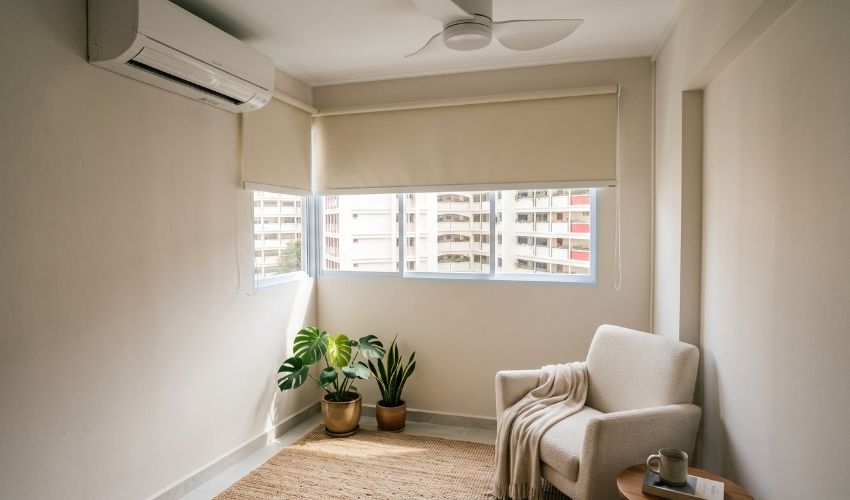
When two windows meet at a corner, each side can be assessed for its own straight-mounted blind.
A narrow window on one wall does not need to share the same blind width as the larger window beside it. Separate blinds also allow you to adjust each side independently.
The junction deserves particular attention. Ask your dealer to explain how the blinds will meet, where a light gap may remain, and whether the proposed arrangement suits your privacy needs.
For a bedroom, discuss these gaps before confirming the order rather than assuming blackout fabric will eliminate every source of light.
Bay windows and angled window layouts
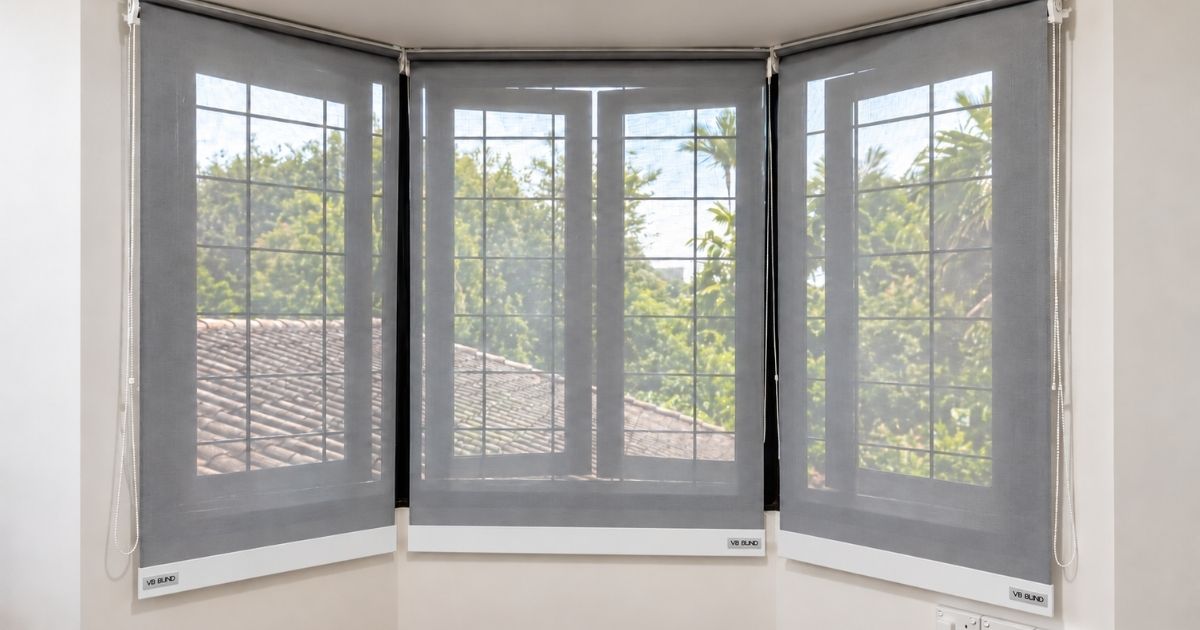
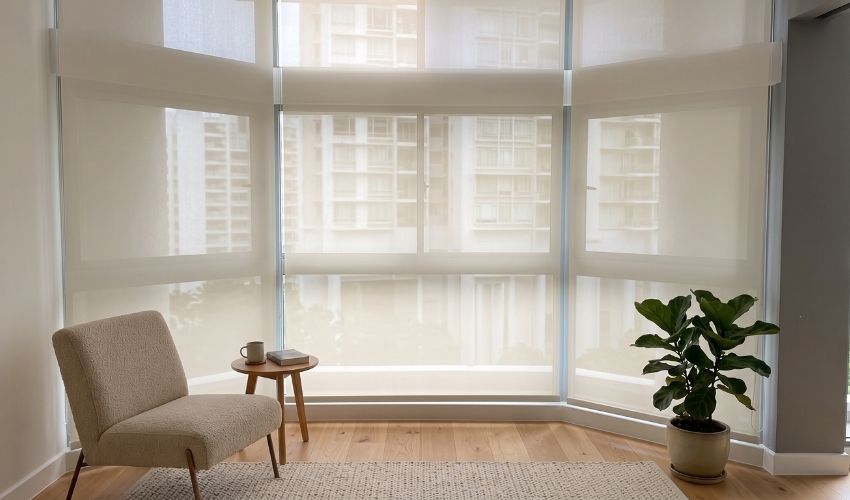
A bay window may have a central section with two angled side sections. The practical approach is to assess each section for a separate rectangular blind.
The blinds remain straight; the arrangement follows the individual faces of the bay.
Bracket positions, fabric clearance and control access need to be planned together. Ask whether the panels can operate independently and how the fabric edges will sit where adjoining sections meet.
This is particularly useful when one section receives stronger sunlight or needs to remain open more often.
Wide windows and joined panes
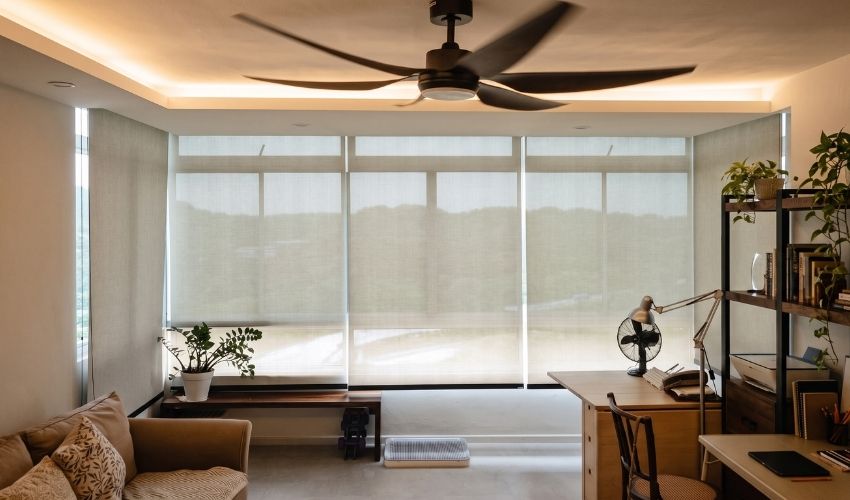
A broad window does not always need one continuous blind. Depending on the dimensions and system, dividing the opening into multiple panels may be more appropriate.
Discuss where those divisions should fall. Window frames, access points and furniture positions can help guide the arrangement.
For example, you may want to raise one section for a view while keeping another lowered beside a desk. Explain these everyday preferences during measurement so the panel layout supports how you use the room.
Tall and hard-to-reach windows
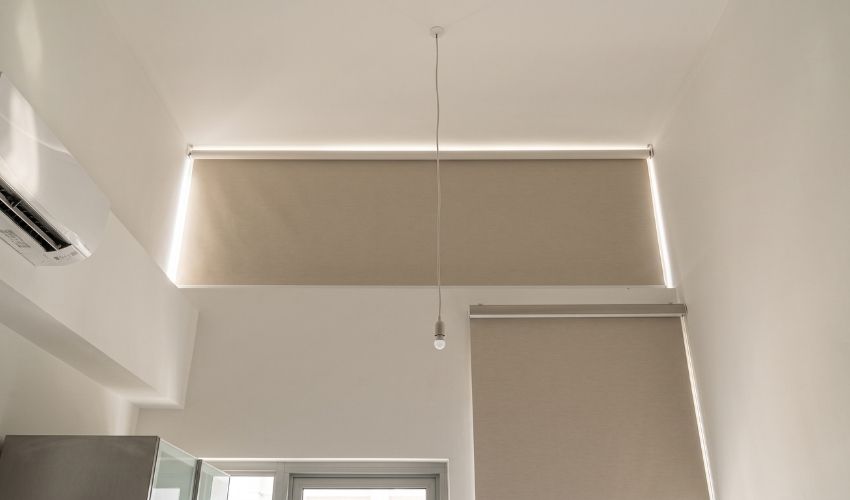
For high rectangular windows, consider both coverage and access to the controls.
Motorised operation may be useful when a blind is above furniture or difficult to reach. However, the opening still needs to be assessed for suitable dimensions, mounting support and electrical provision.
VB Blind offers motor options including Somfy, depending on the application. Ask your authorised dealer to confirm the motor and controls suitable for your selected blind. vbblind.com
Triangular, arched and curved windows
Custom sizing does not mean a roller blind can follow every window shape.
For a triangular or arched opening, a dealer would need to assess whether a straight rectangular blind can be mounted across a suitable surrounding area. That may involve covering beyond the glass or leaving part of the opening uncovered.
Some layouts may not suit VB Blind’s available systems. Establishing this early helps avoid an unsuitable installation or an expectation the product cannot meet.
Choose the Fabric Around the Room
The window layout determines how the blinds fit. The room determines what you need the fabric to do.
Explore VB Blind’s Roller Blinds when comparing blackout, dimout and sunscreen options.
For a bedroom, explain how dark you want the room to feel. For a living room or study, discuss glare, daylight and outward visibility. If neighbouring homes overlook the window, consider privacy after dark as well as during the day.
Sunscreen fabric should not be relied on alone for nighttime privacy. Blackout fabric offers stronger light control, but light may still enter around the installation edges. These distinctions are also explained in the VB Blind FAQ. vbblind.com
If you prefer a layered appearance, Korean Blinds may also be considered for suitable indoor windows. Product choice still depends on the available width, installation clearance and room conditions.
Measure After the Surrounding Finishes Are Ready
Accurate measurement involves more than recording the glass width and height.
Your dealer should consider the recess, handles, grilles, tiles, cabinetry and mounting surfaces. At corners and bay windows, the relationship between adjoining blinds also matters.
If you are renovating, discuss the blinds early, then arrange final measurement once the relevant finishes are ready. False ceilings, pelmets and carpentry can affect the available installation space.
Before approving the order, ask:
- How many blind panels are proposed?
- Where will each blind be mounted?
- Will handles and opening windows have sufficient clearance?
- Where should I expect light gaps?
- How will the controls be reached?
A Better Fit Starts with the Right Advice
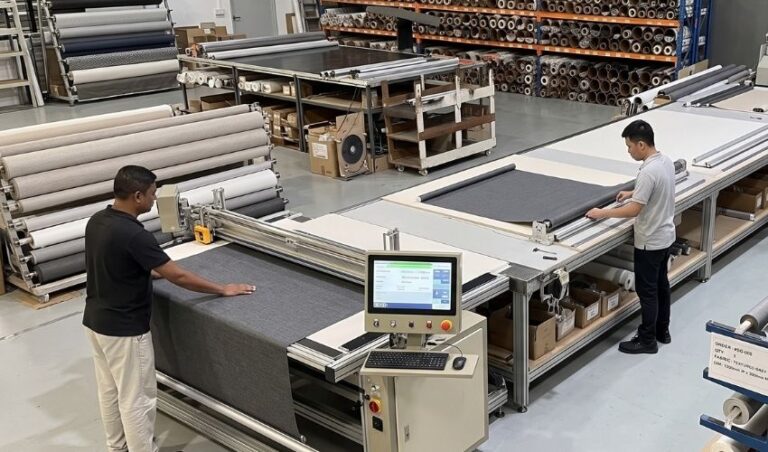
VB Blind manufactures blinds to approved project measurements and specifications. Homeowners arrange measurement and installation through an authorised dealer, who coordinates the requirements for the space. vbblind.com
Bring photographs showing the full window, its corners and any nearby obstructions. Explain when sunlight becomes uncomfortable and whether privacy, glare or stronger light control matters most.
You can learn more about VB Blind’s manufacturing background or speak with a VB Blind authorised dealer about your window layout.
An awkward window deserves a considered solution. With suitable dimensions, practical panel planning and clear expectations, the blinds can become a natural part of how the room works.